Human growth hormone (HGH) is a peptide hormone made by the pituitary gland. It helps children grow, but its job doesn’t end when they reach adult height. Growth hormone continues to influence bone, muscle, fat metabolism, and other processes throughout adulthood.
Somatropin is the recombinant form of human growth hormone used as a prescription medication. Modern somatropin matches the 191-amino-acid sequence of the main form of human growth hormone produced naturally by the body.
Here’s what the hormone actually does, why those 191 amino acids matter, what can cause HGH levels to become too high or too low, and how prescription HGH fits into treatment.
HGH, Somatropin, and 191aa at a Glance
Somatropin 191aa isn’t a separate type of hormone from somatropin. The “191aa” describes its amino-acid structure. See what each one means at a high level.
Term | What It Means |
HGH / human growth hormone | A peptide hormone naturally produced by the pituitary gland |
GH / growth hormone | Shortened medical term for growth hormone |
Somatropin | Recombinant human growth hormone used as medication |
Recombinant HGH | HGH manufactured using recombinant DNA technology |
Somatropin 191aa | Somatropin with the same 191-amino-acid sequence found in native human GH |
Norditropin, Genotropin, Omnitrope, Humatrope | Brand-name medications containing somatropin |
IGF-1 | A hormone stimulated by GH that carries out many of its growth-related effects |
What Does Human Growth Hormone Actually Do?
The pituitary is a small gland at the base of the brain, but growth hormone released from it has effects throughout the body.
Natural GH secretion is pulsatile, meaning the pituitary releases it in bursts instead of maintaining one steady blood level. Its production is controlled by a feedback system involving growth hormone-releasing hormone (GHRH), somatostatin, ghrelin, IGF-1, and other signals.
Once GH is released, it can act directly on tissues and also stimulate the liver and other tissues to produce insulin-like growth factor 1 (IGF-1).
The GH and IGF-1 system contributes to several processes:
- Bone and cartilage: Supports linear growth during childhood and helps maintain bone tissue.
- Muscle: Influences amino acid transport and protein metabolism.
- Fat tissue: Promotes lipolysis, the breakdown of stored fat.
- Metabolism: Affects the way the body handles glucose and lipids.
- Tissue growth: GH and IGF-1 signal growth and development in multiple tissues.
What Is Somatropin?
Somatropin is a synthetic human growth hormone produced using recombinant DNA technology. It is used as a prescription medication to replace or supplement growth hormone when treatment is medically appropriate.
Somatropin can come in several delivery formats, including:
- Prefilled injection pens
- Cartridges used with reusable pens
- Vials containing powder that must be mixed before injection
- Liquid formulations that are already prepared for injection
The formulation depends on the manufacturer and product. This is also why “HGH” on a supplement bottle does not automatically mean somatropin. Pharmaceutical somatropin is an injectable biologic medication. Oral products marketed as “HGH boosters” or “HGH support” do not contain prescription recombinant human growth hormone.
Why Does Somatropin Have 191 Amino Acids?
Human growth hormone is a protein made from 191 amino acids arranged in a specific sequence. Modern somatropin is designed to match that sequence.
Early recombinant HGH contained 192 amino acids, adding methionine to the natural 191-amino-acid sequence because of the manufacturing process used at the time. This earlier form was associated with greater antibody formation, and advances in manufacturing made it possible to produce the 191-amino-acid form used today.
So, “somatropin 191aa” simply describes the hormone’s amino-acid sequence. It is not a dose, concentration, or number of international units.
Is HGH 191aa the Same as Somatropin?
In the context of modern recombinant human growth hormone, somatropin is the 191-amino-acid recombinant form of HGH.
That doesn’t mean every product advertised online as “191aa HGH” should be assumed to be pharmaceutical somatropin. The label describes a molecular structure, not the manufacturing quality, sterility, regulatory status, or authenticity of a particular product.
What Is Somatropin Used For?
Somatropin is primarily used to treat growth hormone deficiency (GHD) and certain conditions that affect growth.
Depending on the specific product, approved uses may include:
- Growth hormone deficiency in children or adults
- Turner syndrome or Prader-Willi syndrome
- Growth failure in children born small for gestational age
- Idiopathic short stature
- HIV-associated wasting
- Short bowel syndrome
Adult GHD may develop after pituitary or hypothalamic disease, surgery, radiation, or trauma, or continue from a deficiency that began during childhood. Not every somatropin brand is approved for every condition, so treatment depends on the specific medication and diagnosis.
What Are the Benefits of HGH Treatment?
The benefits of HGH treatment depend on the condition being treated. In children with growth hormone deficiency, treatment can support growth and development.
For adults with confirmed GHD, the Endocrine Society reports potential improvements in:
- Body composition
- Exercise capacity
- Bone health
- Quality of life
These benefits apply to medically indicated treatment for growth hormone deficiency and shouldn’t be assumed for healthy adults with normal HGH levels.
Where Norditropin Fits In
Norditropin is Novo Nordisk’s brand of somatropin, or recombinant human growth hormone. It comes in a FlexPro prefilled pen with premixed medication, eliminating the need to reconstitute HGH powder before injection.
Other brands, including Genotropin, Omnitrope, and Humatrope, also contain somatropin, although their delivery devices, storage requirements, and approved uses can differ.
Why Can HGH Levels Change?
Growth hormone is not supposed to stay at one fixed level. Normal GH production varies with age and physiological conditions, and secretion occurs in pulses. That alone makes growth hormone different from a lab value that can always be interpreted from one random blood draw.
Persistently abnormal GH production, however, can result from disease or damage involving the pituitary and surrounding structures.
What Can Cause Low Growth Hormone?
Growth hormone deficiency can begin in childhood or develop later.
Potential causes include:
- Genetic or congenital abnormalities affecting pituitary development or GH production
- Pituitary or brain tumors
- Surgery involving the pituitary region
- Radiation to the brain or pituitary area
- Severe brain injury
- Inflammation affecting the pituitary
What Can Cause Too Much HGH?
Persistent growth hormone excess is very different from the normal fluctuations that occur during the day.
In adults, prolonged excess GH causes acromegaly. More than 9 out of 10 cases of acromegaly are caused by a pituitary adenoma, usually a benign tumor that produces excess GH.
Much more rarely, tumors elsewhere in the body can produce GH or growth hormone-releasing hormone, which then stimulates excessive pituitary GH production.
Low and High HGH Are Two Different Clinical Problems
Looking at both sides of the GH spectrum makes its role easier to understand.
Growth Hormone Deficiency | Growth Hormone Excess |
Body produces too little GH | Body produces too much GH |
Can occur in children or adults | Causes gigantism in children or acromegaly in adults |
May follow pituitary disease, surgery, radiation, injury, or congenital conditions | Usually caused by a GH-secreting pituitary tumor in adults |
Adults may have increased body fat, reduced muscle mass, lower energy, and reduced bone mass | May cause enlarged hands/feet, facial changes, sweating, headaches, joint problems, and metabolic complications |
Somatropin may be used when treatment is indicated | Treatment aims to reduce GH/IGF-1 and address the underlying cause |
HGH Injections: What the Medication Actually Looks Like
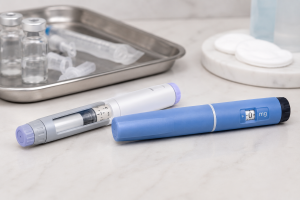
Prescription somatropin is administered by injection. Many current products are given subcutaneously, meaning into the tissue beneath the skin.
Depending on the brand, the medication may arrive as a ready-to-use solution or as a powder and diluent that need to be combined according to the manufacturer’s instructions.
Patients should be taught how to prepare and administer their specific product because the devices are not interchangeable.
HGH Treatment Has Some Risks, Too
Somatropin is a prescription hormone, not a general wellness supplement.
Potential side effects can include:
- Injection-site pain, redness, swelling, or itching
- Headache
- Muscle or joint pain
- Swelling from fluid retention
- Numbness or tingling
- Changes in blood glucose
Somatropin can also require additional monitoring in people with certain medical conditions. Product labeling includes important precautions involving conditions such as active malignancy, acute critical illness, diabetes or impaired glucose tolerance, intracranial hypertension, thyroid function, and adrenal function.
Is Human Growth Hormone Legal?
Yes. Human growth hormone is a legitimate prescription medication used to treat diagnosed medical conditions, but it should be obtained through an appropriately licensed medical provider.
HGH Meds is a licensed clinic in Mexico with licensed physicians and operates under Mexico’s healthcare regulatory framework, including COFEPRIS. We source pharmaceutical HGH through established manufacturer channels rather than selling research-grade products or supplements marketed as substitutes for prescription somatropin.
Available manufacturers include Novo Nordisk, Pfizer, and Sandoz. When evaluating a source for HGH, check the provider’s licensing, manufacturer, product labeling, medication format, and storage requirements.
For more information, see our guides to where to buy HGH or learn exactly how to buy HGH injections online.
The Bigger Point: HGH Is a Hormone, Not a Shortcut
Understanding what human growth hormone actually is changes the way you look at HGH therapy. GH sits inside a regulated endocrine system.
The pituitary releases it in pulses; other hormones help control that release; GH stimulates IGF-1, and deficiency can cause clinically significant problems.
Somatropin gives medicine a way to replace human growth hormone when there is a legitimate reason to do so. Modern recombinant somatropin reproduces the 191-amino-acid sequence of native human GH, but treatment still requires the right patient, dose, product, and monitoring.
If you’re considering HGH treatment, contact HGH Meds to learn about the pharmaceutical HGH brands currently available through our licensed clinic in Mexico.
Frequently Asked Questions About Human Growth Hormone and Somatropin
1. Is somatropin the same as HGH?
Somatropin is a recombinant human growth hormone used as medication. Natural HGH is produced by the pituitary gland, while somatropin is manufactured to reproduce the 191-amino-acid sequence of human growth hormone.
2. What does 191aa mean in somatropin?
“191aa” means 191 amino acids. Modern recombinant somatropin has the same 191-amino-acid sequence found in the predominant form of naturally occurring human growth hormone.
3. Is growth hormone a peptide or a steroid?
Human growth hormone is a peptide, or protein, hormone, not a steroid hormone. It is made from a chain of amino acids, while steroid hormones are derived from cholesterol and have a different chemical structure.
4. What is somatropin used for?
Somatropin is used for diagnosed growth hormone deficiency and several other medical conditions. Approved uses vary by product, age group, and brand, so one somatropin medication should not automatically be assumed to have all the same indications as another.
5. What happens if your body produces too much HGH?
Persistent HGH excess can cause gigantism in children or acromegaly in adults. In adults, possible signs include:
- Enlarged hands and feet
- Facial changes
- Increased sweating
- Headaches
- Joint pain
- Vision problems
6. What causes low human growth hormone?
Growth hormone deficiency can result from:
- Congenital or genetic conditions
- Pituitary or brain tumors
- Surgery
- Radiation
- Severe brain injury
- Other damage to the pituitary region
In some patients, the cause is not identified.
7. Is human growth hormone legal?
Prescription human growth hormone has legal medical uses, but the rules depend on the country and how it is prescribed, dispensed, and imported.
HGH Meds is a licensed clinic in Mexico, operating under Mexican regulatory requirements through COFEPRIS and SAT.
8. Is Norditropin somatropin 191aa?
Yes. Norditropin contains somatropin, a recombinant form of human growth hormone with the same 191-amino-acid sequence as HGH naturally produced by the body. Norditropin is made by Novo Nordisk and comes in a prefilled FlexPro pen.